ብሎግ / Cosmology
Laniakea

· 2 ደቒቕ ንባብከምኡ’ውን ብ፦EnglishTiếng ViệtአማርኛSoomaali
እዚ ጽሑፍ ክሳብ ሕጂ ብቋንቋኹም ኣይተዳለወን፣ ስለዚ ብእንግሊዝኛ ቀሪቡ ኣሎ።
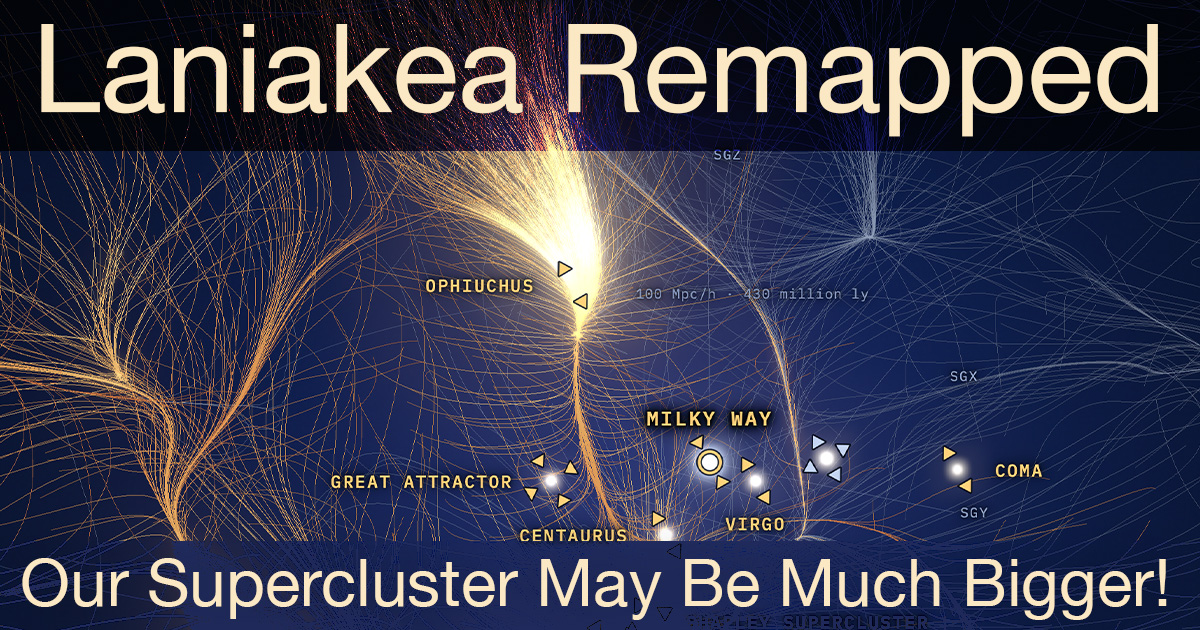
Laniakea Supercluster
What is this map?
It is a slice through the plane of the nearby superclusters, about 1.7 billion light-years across.
What are the lines?
Each line traces the direction galaxies are flowing, and lines brighten as they flow downstream.
How to read it
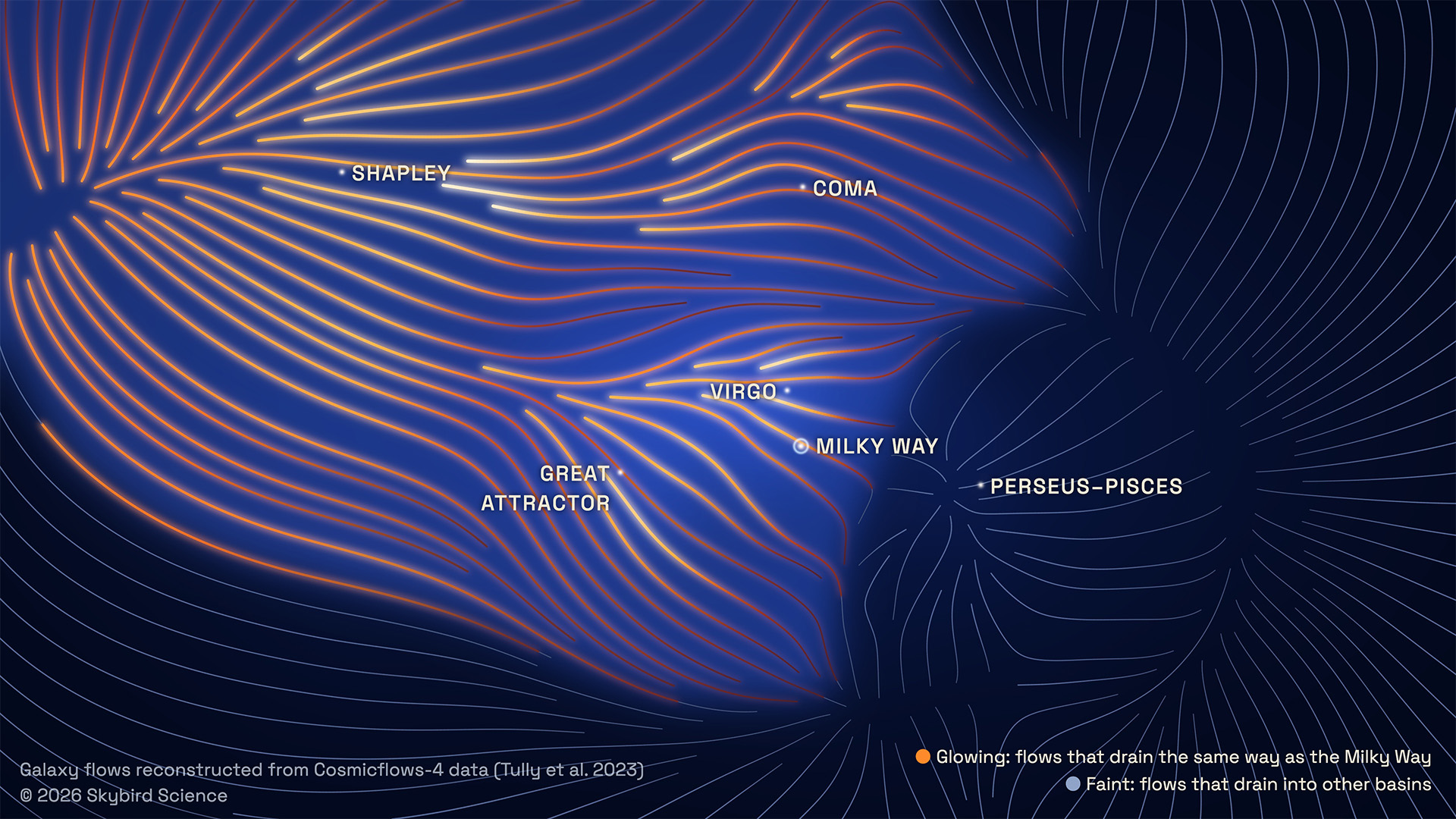
- Glowing orange-yellow on a lighter royal-blue field: our basin, meaning every flow that ends up in the same place as the Milky Way’s own flow. It takes in Virgo, the Great Attractor, Coma and Shapley.
- Thin, faint lines on dark navy: flows that drain into other basins. Perseus–Pisces sits just to our right, at the center of its own basin.
- The original 2014 study named our basin Laniakea, Hawaiian for “immeasurable heaven.” The 2024 Cosmicflows-4 study put it at about a 40% chance that the Milky Way belongs to a separate Laniakea basin and 60% that it belongs to the larger Shapley basin.
Would you like to see this model - in 3D?
Laniakea Remapped in 3D
When I finally finished building the 3D model, I started to cry. I was filled with a sense of awe. Why? Jehovah stretches out the heavens like mere fabric. He caused this universe to become.
When you look at the 3D map, the two Basin View buttons compare something else: the same 2026 data at full detail and smoothed. At full detail the Milky Way sits in its own basin, which is Laniakea. Smoothed, that basin becomes part of the much larger Shapley basin. That’s the question the 2024 study put at 40% vs 60%.
What the table shows about 2014 vs 2026: At full detail, the 2026 map largely confirms the 2014 Laniakea:
- The flows drain toward the Great Attractor region.
- It contains the same members: Virgo, Centaurus and the Great Attractor.
- It comes out larger and about twice as massive. How so?
The first shows it could be shaped like a mango, 400 by 800 million light years across. The second is huge, a billion light years across.